
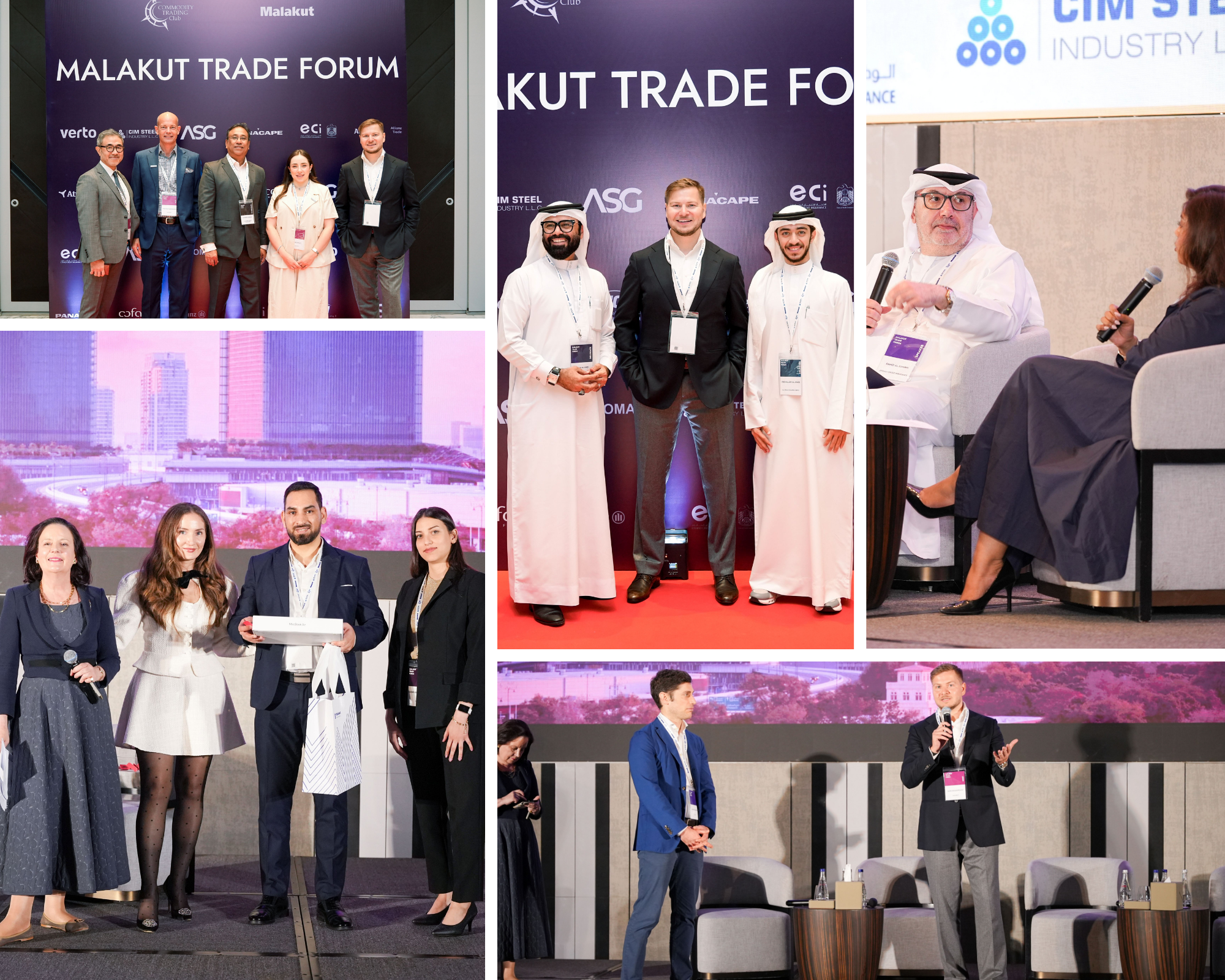
On November 12, 2025, the One and Only One Za’abeel in Dubai became the centre of gravity for the global commodity, logistics, trade finance, and risk management communities. More than 200 senior executives, industry trailblazers, and government leaders arrived for the Malakut Trade Forum 2025. The atmosphere was unmistakably electric. From the first moment, it was clear that this was not simply another industry gathering but a truly grand platform that celebrated leadership, collaboration, and the future of international commerce.
As Malakut’s largest event to date, the forum highlighted the UAE’s expanding influence as a global business powerhouse. It also showcased Dubai’s rise as one of the world’s most strategic hubs for trade dialogue and cross-border cooperation. The forum was supported by the Commodity Trading Club, whose international network includes more than 115,000 professionals across commodity trading, shipping, operations, finance, and legal sectors. Together, the depth and diversity of the audience created an ecosystem of insight that few events in the region have achieved.
The day began with a vibrant networking lunch attended by leaders from Bloomberg, DP World, Emirates NBD, Deloitte, Hitachi Energy, Bureau Veritas, Al Ghurair Foods, and the London Stock Exchange Group. Conversations spanned shifting market cycles, disruptive technologies, and evolving regulatory landscapes. The energy in the room revealed something important. This was not a conference. It was a convergence of global perspectives shaping the next era of trade.
After the lunch, Malakut’s leadership welcomed guests, followed by an opening address from economist and moderator Dr. Cornelia Meyer. She emphasized the need for strategic resilience in a world defined by uncertainty. Her remarks set the tone for the afternoon, reminding delegates that technology, geopolitics, and supply chain vulnerabilities are transforming the way businesses operate.
The forum’s panel discussions formed a seamless narrative that explored the most pressing challenges facing global trade and the solutions that forward-thinking organizations are adopting.
The first panel, titled “Hacking the Supply Chain: How to Stay Resilient Against Evolving Cyber Risks,” addressed the growing exposure of global supply chains to cyber threats. Experts Bernd Martens of Malakut, Tom James of Tradeflow Capital, and Rainer Breeck of Breffka and Hehnke, guided by moderator Andrew Glass, examined the weaknesses created by rapidly digitizing operations. Their insights revealed a common conclusion. Cyber resilience has become a top priority for companies that rely on uninterrupted flows of goods, data, and capital.
This discussion naturally paved the way for Panel 2, “Receivables Under Pressure: How to Safeguard What You Are Owed.” As market liquidity fluctuates and payment risks intensify, protecting working capital has become critical for businesses in every sector. Bruno Massera from MBRF and Ramzi Al Rimawi of Etihad Credit Insurance, joined by moderator Vanessa Balaji, explored how credit insurance, enhanced analytics, and structured risk strategies are helping companies secure their receivables and maintain financial stability. The audience gained a clear understanding of how operational risk and financial risk are deeply intertwined.
The third session, “Trade Finance Reimagined: Unlocking Liquidity for Global Trade,” built upon this theme. As traditional lending conditions evolve, companies are seeking new ways to access liquidity. Speakers Bethanie Castelnuovo from SCB, independent advisor Michael Bourdier, and Tom James explored how fintech platforms, alternative financing mechanisms, and data driven underwriting models are reshaping trade finance. Their dialogue highlighted the growing need for flexibility, speed, and transparency in global capital flows and showed how modern financing solutions support more resilient supply chains.
The final panel, “AI in Motion: Transforming Global Logistics Through Smart Technology,” unified the day’s conversations by demonstrating how innovation is driving the industry forward. With insights from Gary Kesser of Panacape Trading, Chris Mudry of Amphora, and Rustam Nurbaev of Panasia Group, moderated by Ian Moolman, the discussion illustrated how artificial intelligence is elevating forecasting accuracy, enhancing operational efficiency, improving compliance, and strengthening end-to-end supply chain visibility. The message was unmistakable. Technology is no longer a supplement to global trade. It is a core driver of competitiveness and growth.
Throughout the day, raffle draws, exhibitor showcases, and interactive conversations added excitement and depth. Delegates had dedicated access to solution providers across technology, finance, and advisory services, offering them a complete view of the innovations advancing global trade.
As the final panel concluded, Dr. Cornelia Meyer returned to deliver an articulate and compelling summation of the day's discussions. Her closing message reinforced a unifying truth. The future of international trade will be shaped by organizations that combine innovation, robust risk management, and strategic collaboration.
The day transitioned into an elegant cocktail reception, where delegates continued their conversations in a relaxed and refined setting. Many described this moment as one of the event’s greatest strengths. It created the space where partnerships were formed, agreements were explored, and new ideas took flight.
By the end of the evening, the success of the Malakut Trade Forum 2025 was undeniable. It accomplished more than hosting influential voices. It created a platform where industries connected, insights evolved, and leaders from around the world aligned their vision for the future. The forum reinforced Dubai’s status as a global hub of innovation, trade excellence, and cross-border cooperation. It also cemented Malakut’s role as a convening force shaping the next era of global commerce.
The event did not simply meet expectations. It set a new standard for premium industry gatherings in the region. It connected leaders. It created value. And it delivered a lasting imprint on the global trade community.