
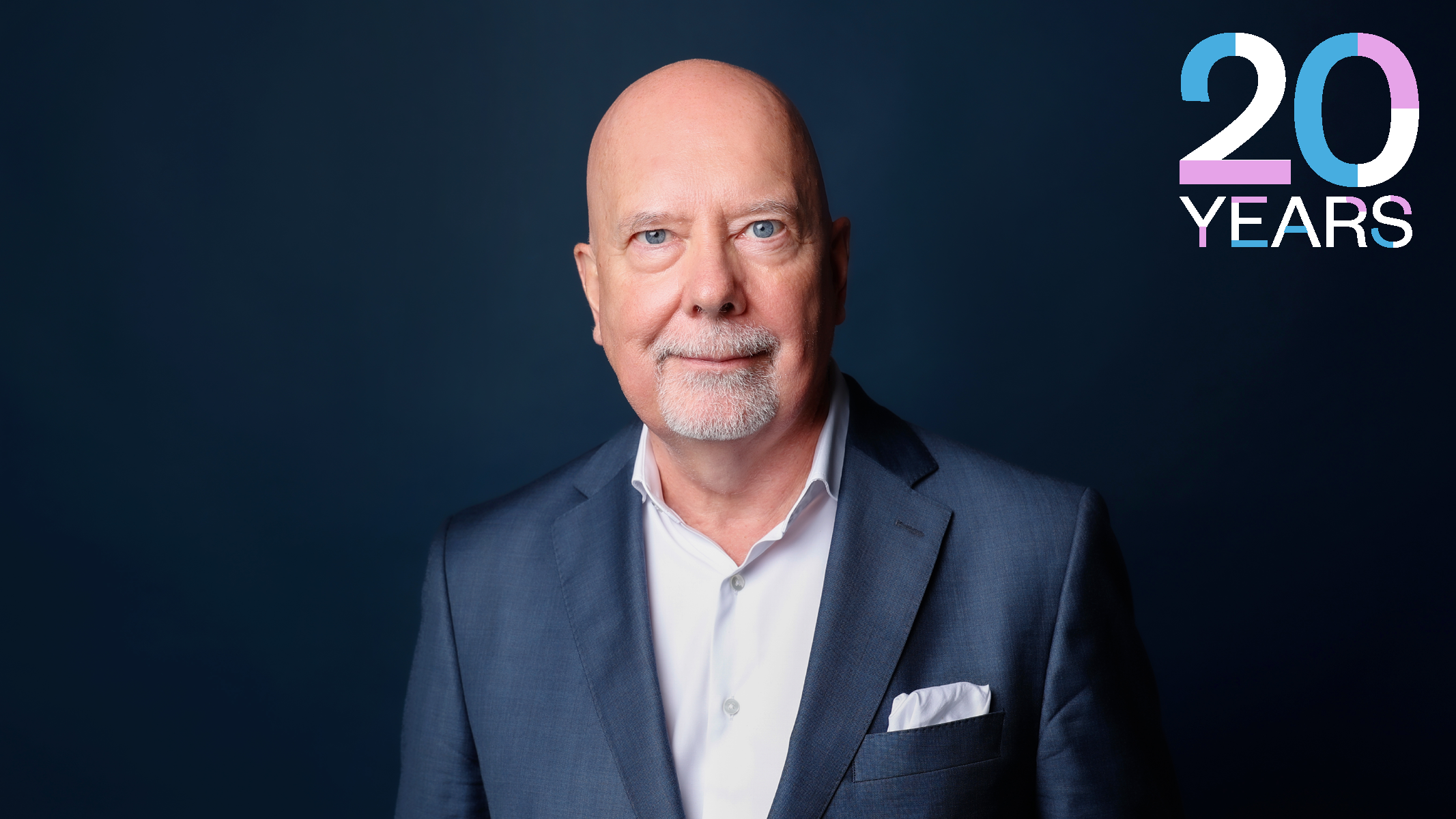
In celebration of UnisonSteadfast’s 20th anniversary, CEO Wolfgang Mercier reflected on the network’s remarkable growth, industry impact, and future direction. He shared insights into the company’s origins, highlighting how the vision of creating a global independent broker network evolved over time.
Mercier discussed the key challenges UnisonSteadfast faced in its early years and the strategic initiatives that helped it become the world’s largest independent insurance broker network. He emphasized the importance of adaptability in an evolving insurance landscape, the role of innovation, and the ongoing support UnisonSteadfast provides to its members.
Looking ahead, he shared his vision for the company’s continued expansion, the role of technology in the industry, and his personal leadership philosophy. He concluded with reflections on his most rewarding experiences as CEO and his aspirations for UnisonSteadfast’s future.
Exclusive Interview with Wolfgang Mercier CEO UnisonSteadfast: Company Growth & Vision
Conducted by Alex Hodges, Owner Insurance Services Network, Inc. and Editor IRL, Insurance Research Letter
Q1: As UnisonSteadfast celebrates its 20th anniversary, how would you describe its journey from inception to becoming the world’s largest international network of independent brokers?
First of all, let me clarify: UnisonSteadfast’s journey is far from over. It all started with an entrepreneurial decision: How do you start a business, how do you get your first customers, how do you use existing contacts and build a working infrastructure? The first three years were an intensive start-up phase, and by the end, we reached the break-even point.
This was followed by a period of strategic expansion of our network: In which countries aren’t we represented yet? How could we optimize our sales strategy? Over the years, the Independence Day Conferences also evolved - first as informal get-together on the roof terrace of our office, later as international events with greater organizational complexity. The challenges of such conferences abroad proved to be more complex than our day-to-day international business.
As our success grew, so did the competition. In the early days of our network, a strong competitor attempted to obstruct UnisonSteadfast through both legal and questionable means. By then, we had already gained attention and took additional steps to increase our public presence—with greater success.
After a decade, UnisonSteadfast had grown into the world’s third-largest independent insurance broker network. However, the market was evolving, with brokers becoming increasingly appealing to investors—including those within our network. To ensure stability and security, we formed a joint venture with the Steadfast Group in 2017. Preserving and strengthening our own independence, as well as that of our brokers, remained a top priority.
The partnership with Steadfast added a new dimension to our company: visibility increased, compliance requirements became more stringent, professionalism advanced, and we faced new challenges, particularly in finance and IT. However, the early 2020s did not unfold as we had hoped, prompting us to reassess our direction. By refocusing on our core strengths—true to the motto “back to the roots”—we successfully turned things around, regained our footing, and got back on an upward trajectory.
I am now preparing for my successor—a long-term process that requires more than just two to four years before my departure. Realistically, it demands a ten-year timeframe. The challenge lies in the fact that while some responsibilities can be gradually handed over, new aspects continually emerge.
This journey has taught me that an overly visionary approach is not the best way to achieve goals. Instead, you should focus on a realistic plan to ensure sustainable success.
Q2: Did you always envision UnisonSteadfast as a global network, or did the vision evolve over time?
he definition of what a large network actually means is critical. If you measure size by the number of brokerage firms that are part of our network, then we are demonstrably the largest network in the world.
Our core mission has always been to support small and medium-sized brokers in gaining international business, thereby contributing to the SME sector.
Rather than simply seeking out brokers with existing international expertise, we have cultivated these capabilities within UnisonSteadfast and made them accessible to our partners. This enables them to successfully navigate international business opportunities. Additionally, we provide training and actively assist them in acquiring new clients.
Becoming the largest network was never my primary goal. From the beginning, my focus was on establishing a strong presence among the leading networks—securing a place in the top five was already an ambitious personal objective. While we are, of course, pleased to now be the largest network, size alone does not determine the quality of a network.
Q3: What do you consider to be the key factors that have contributed to the company’s success and longevity?
The groundwork for our network was laid in the first six months when ten brokers brought their clients from 60 countries into the network. This provided a strong basis for our growth.
I can't identify a single key factor behind our success, but I've frequently received feedback that there had never been anyone quite like me before—someone who connects people, approaches them openly, and inspires them to join the network and actively contribute to our collective success.
There are different leadership styles: some leaders are defined by a clear vision, while others excel through technical expertise, structure, and external authority. I did not fit into either of these categories.
My strength lay in my communication skills and positive energy. People enjoyed being around me, and I wanted to reflect that same feeling in the culture of our network. UnisonSteadfast was meant to foster a friendly, partnership-driven atmosphere where everyone feels welcome. However, it has always been just as important to balance hard work with social engagement, following the principle we express in German: work first, then enjoyment.
From the very beginning, I had a clear vision of the environment I wanted to cultivate within the network—and perhaps that has been the key to our success. While we share strong personal and professional connections, we must always remember that business is the backbone of our network. Without a dynamic and thriving business, UnisonSteadfast would not exist.
We are not just a group of brokers who meet once a year for dinner and then go our separate ways. Our network thrives on international business, which is why we are fully committed to strengthening it and actively supporting our members in achieving success.
Q4: How has the independent broker landscape changed over the past 20 years, and how has UnisonSteadfast adapted to these shifts?
The insurance industry has significantly changed over the past 20 years, just like any other sector. In the past, much was done manually. Personal relationships were crucial, and a handshake—especially among Hanseatic businesspeople and within the insurance industry—held much greater value than it does today. Back then, it was a symbol of trust and commitment. Today, however, that is often no longer the case.
Processes within insurance companies are now more clearly and strictly defined, requiring brokers to adapt accordingly. The administrative burden on brokers has increased significantly, along with the technical and regulatory expertise required - far more than in the past. Today, brokers working in the industrial insurance sector must not only be highly qualified but also possess risk engineering skills and a broad understanding of various specialties.
Without these competencies, it is increasingly difficult to remain competitive.
In the past, midsize brokers primarily served medium-sized companies, while large corporations worked with major brokerage firms. Over time, however, midsize brokers have become more appealing to large corporations, largely due to lower margins and commissions. There was a period of uncertainty about the future of our brokers, but it soon became evident that midsize brokers held a unique advantage: they bring an entrepreneurial approach to client management.
There is a fundamental difference between a sales employee from a large brokerage firm speaking with a business owner and two entrepreneurs engaging in a conversation on equal footing. This entrepreneurial approach is a key added value of midsize brokers.
Challenges surrounding resources and capacity have persisted, especially due to large-scale claims, such as those caused by natural disasters. This has required constant adaptation to new insurance solutions and technological advancements. Nonetheless, the insurance industry has proven to be extremely stable. Even during the COVID-19 pandemic, when many companies were forced to lay off employees, the market remained steady and continued to evolve. The key to success was, and still is, flexibility.
Independent brokers may not be perfect in every way, but they have one defining trait: they are adaptable and flexible. And that adaptability is the key to thriving in an evolving industry.
Q5: What are the biggest challenges currently facing independent brokers, and how is UnisonSteadfast addressing them?
In recent years, challenges for independent brokers have been steadily increasing, particularly due to rising administrative demands and increasingly complex regulatory frameworks at both national and international levels. Bureaucracy is growing, requiring brokers to dedicate more time to compliance and documentation.
Another significant challenge is IT and digitalization, including the integration of artificial intelligence, especially for midsize companies. The insurance sector still has considerable ground to cover in this area and staying competitive demands significant investment and expertise in technological advancements.
Talent acquisition is also becoming more difficult. Finding skilled professionals has become a real challenge, and traditional recruitment methods are no longer enough. To address this, we are looking beyond the insurance industry.
We actively recruit talent from other sectors—people who may not have an insurance background but bring valuable skills from different fields. We then offer specialized training to prepare them for the unique demands of the insurance business.
Succession planning is another critical issue. Many brokers face uncertainty about the future of their businesses. Although many would prefer to pass their companies on, they often end up selling due to a lack of viable successors.
Exploring new models, such as creating a shared financial fund that combines monetary assets with a talent pool, could provide valuable support. This would help brokers considering selling or struggling with succession planning, offering financial resources and facilitating a smoother transition.
Such a talent pool could also help develop a new generation of entrepreneurial brokers—individuals ready to take the next step into business ownership. Many skilled professionals have the potential to transition from employment to independent brokerage. Structured initiatives like this could help secure the future of independent brokerages and ensure long-term market stability.
Q6: What has changed in terms of service delivery to member brokers from the early days?
In the early days, our service delivery was much more personal and direct, with fewer formalized structures. Today, increasing administrative requirements and stricter regulations, both nationally and internationally, require a more structured and compliant approach.
Additionally, IT and digitalization have become crucial elements, especially for medium-sized companies. The insurance industry has had to adapt to these changes by integrating advanced technological solutions to improve efficiency and compliance.
Another key shift has been in human resources. Finding qualified professionals has become more challenging, requiring innovative approaches to recruitment. Instead of solely relying on experienced insurance professionals, we now look beyond the industry and attract talent from other fields, leveraging their transferable skills while providing them with the necessary training.
The industry has also undergone significant consolidation, with more mergers and acquisitions than ever before. However, the demand for brokers and advisory services remains strong. UnisonSteadfast has adapted by continuously evolving its support services, ensuring member brokers have the tools, expertise, and global reach they need to stay competitive.
Q7: How do you see the role of independent brokers evolving in the next decade?
People have speculated for years that independent brokers might disappear, but that has never happened, and it won’t. Brokers have been bought and sold multiple times, yet many return to independent status. Some investors even help broker groups maintain their independence by only managing administrative tasks on their behalf.
Consolidation through mergers and acquisitions is occurring at an unprecedented scale, but the need for expert advice and brokerage services will always exist. Nevertheless, brokers will need to adapt and redefine their roles.
The traditional broker was originally an independent insurance agent, offering more flexibility by working with multiple insurers rather than being tied to one. Today, the role has evolved into a much more consultative function.
In the past, many brokers were reluctant to talk about their earnings, worried about reactions like, “You make that much just for giving advice?” Today, there is more transparency, and brokers are beginning to recognize the true value of their services. Just like tax consultants, auditors, and lawyers who openly charge high hourly rates, brokers should not hesitate to charge € 80–100 per hour for the essential services they provide.
A broker ensures that businesses are properly insured, selects the right insurers who can be trusted to pay claims, and provides vital support in the event of a claim. Without this, businesses might not survive. This is a mindset shift that still needs to be fully embraced by some brokers, but we are on the right track.
Q8: Can you share some insights on how the IDC (Independence Day Conference) concept was born and its impact on UnisonSteadfast’s growth?
In the beginning, IDC was simply a pleasant “get-to together”, a way to show our growing network and bring people together. However, we quickly realized that if people only knew the person sitting in Hamburg, they wouldn’t feel part of a truly international community. From the start, our goal was to create a global network, not just a consultancy that sources solutions from abroad when needed.
To foster this sense of community, it was essential to bring people together physically. This created an energy that extended beyond the event itself, inspiring members to develop new ideas and take initiatives forward. IDC is not just about networking and having a good time; it is about generating momentum that drives the network forward long after the event ends.
Although organizing the conference is a huge effort and not a profit-making venture for us, even with participation fees, we are happy if we break even, it remains a crucial marketing tool.
Over the years, we’ve come to understand, thanks in part especially to Polina Balko, that the quality of such an event directly reflects the quality of the network itself. IDC provides us with an opportunity to bring our most important partners together on a deeper level, strengthening collaboration and long-term development. That’s why this event is so important to us.
Q9: What role does innovation and technology play in UnisonSteadfast’s growth strategy?
Innovation is a key priority for us, as stagnation leads to falling behind.
Continuous development is only possible through fresh ideas and innovative approaches.
We promote innovation in multiple ways: by creating sub-networks, forming specialized practice groups, establishing competence centers, and implementing new marketing strategies such as newsletters and the UnisonTimes magazine.
A major focus for us is integrating technology into our operations and our global network. We have already taken steps in this direction, discussing digitalization and AI-driven changes at our last conference in Barcelona. This year, we will make a major leap forward by completely revamping our IT infrastructure, not only for the next three to four years but for the long term, incorporating AI-driven advancements.
Our goal is to consolidate all processes, membership applications, partner collaboration, and international insurance transactions onto a single platform. This platform will:
- Allow brokers to onboard and access all relevant information seamlessly.
- Host workshops and training sessions as part of an ongoing learning ecosystem.
- Digitize and streamline the entire process of handling international insurance business.
- Ensure that when new clients enter our network, all necessary data is recorded, relevant partners are connected instantly, and communication channels are established in real-time.
- Provide permanent access to all contract details, claims, and financial transactions worldwide.
We believe we have identified the right platform, which will be further developed to provide a truly global solution. While this is a major undertaking, digitalization is inevitable, and we are committed to embracing it.
Q10: What motivated the decision to open an office in Chicago, and what advantages has that location brought to the company?
Indeed, the U.S. market is and has always been our most important market outside of Germany. Most of the international business brought into the Unison network is directed toward the U.S., as many companies view it as a crucial sales region. That’s why building a strong connection with the U.S. has always been a priority for us.
Markets can fluctuate, and protectionist policies may emerge, but history has shown that this doesn’t necessarily work against us. When a market becomes more protectionist, companies seeking to do business there often need to establish a stronger local presence. This shift increases the demand for customized insurance solutions, which is where we come in.
Our goal has always been to emphasize the importance of the U.S. market and make it our first international office location. Having a direct presence there is invaluable, especially given the complex insurance and legal landscape across 50 states, each with its own regulations. By being on U.S. ground, we stay informed and ensure that our partners and clients doing business in the U.S. receive the best possible support.
Q11: As CEO, what have been your most rewarding moments leading UnisonSteadfast? What are you most proud of?
First and foremost, founding a company is a significant achievement. From the start, I knew I couldn’t do it alone—I needed strong partners with diverse expertise to support me. Watching that initial vision take shape and come to life with a small, dedicated team was something I felt truly proud of from the very beginning.
In 2015, we celebrated our 10th anniversary in Miami. By that time, our shareholder structure had begun to evolve, and I could tell that we were strengthening our position. It was a clear indication that our growth was moving in a very positive direction. That same year, we saw in the press that we had become the third-largest broker network in the world. We also opened our Chicago office. That was a pivotal moment for me - one where I felt immense pride in what we had accomplished.
Another moment that stands out is seeing my daughter, Muriel, grow and thrive within the company. She started at the very bottom and wasn’t treated in a different way just because she was my daughter. Just like other employees, Muriel first had to prove herself by demonstrating her skills and dedication, assisting every employee, before earning respect and moving up.
She had to go through the “Mercier family school of hard knocks”. Seeing her progress has given me confidence that the company has a strong future ahead.
I was also incredibly proud when we entered into the partnership with Steadfast in Australia. It marked a new dimension for UnisonSteadfast—suddenly, we had an international investor and shareholder. But more importantly, we had a joint venture partner with an exciting and successful business model in Australia. The fact that Steadfast ultimately chose to partner with UnisonBrokers over other networks was a huge validation of our work.
The final phase of negotiations was nerve-wracking and exhausting, so when everything was finally settled with the lawyers, and I was able to announce the success at IDC 2017, it was a truly fulfilling moment.
Q12: What leadership lessons have you learned over the past two decades that you would pass on to the next generation of leaders in the industry?
Starting a business comes with moments of extreme uncertainty. There were times when I honestly did not know whether we would be able to pay salaries. These situations bring immense stress, and even today, though less frequent or intense than in the early days, challenges still occur. In those moments, you can't help but question whether you made the right decision.
However, once you get through those tough phases, some of which can last a long time, you realize the incredible freedom that comes with entrepreneurship.
I believe people become entrepreneurs for various reasons, just as individuals enter politics for different motivations. For me, it was never about power; I was never interested in power for its own sake. One thing I realized over time, though, is that being an entrepreneur allows you to connect with people at a level that wouldn’t be possible in a traditional employment setting. When you’re an employee, you can’t simply reach out to executives or industry leaders. At some point, I found myself at the CEO level, and suddenly, insurance company executives were approaching me for meetings. That was an eye-opening shift, though it never fully satisfied me. It simply made certain aspects of business a lot easier.
There are, of course, financial incentives in entrepreneurship. Over time, you can choose to extract more capital from your company, whether by selling shares or increasing your salary. But you must always remember that if the company faces hard times, you won’t be able to raise your salary or might even have to cut it. Eventually, money becomes less of a driving force, and other factors take priority.
Looking back, I have never regretted becoming an entrepreneur. I am certain that I had the right mindset and was well-suited for it. But every aspiring entrepreneur must ask themselves: What truly matters to me?
The famous “work-life balance” is something that I never had. My career was always my priority, even from a young age. I traveled extensively and missed out on important moments with my children. I wasn’t always there to see them grow up, and I even missed key milestones like school enrollment ceremonies. Looking back, I see those sacrifices as mistakes.
However, dedication to a clear goal and learning the full scope of entrepreneurship are invaluable lessons. Being an entrepreneur doesn’t just mean making business decisions, hiring or firing people. It also means carrying a deep sense of social responsibility. Every decision you make doesn’t just impact you; it affects every single employee in your company. That’s something leaders must always remember. I have always tried to make decisions with this responsibility in mind.
Q13: Looking ahead, where do you see UnisonSteadfast in the next 10 to 20 years?
It’s difficult to predict such long timeframes, but what I can say is that in recent years, our company has been on a steady growth path.
We will continue to expand into specific business areas and further develop our areas of expertise.
One of the most interesting trends we see is that our insurance community is no longer just about brokers. More and more midsize insurers are becoming part of the network. Many of these insurers lack international expertise, yet they are interested in participating in global business. At the same time, we need their capacity to support international deals. Given this, it is in our best interest to support these midsize insurers and help them navigate the complexities of international insurance. This is a segment where we see strong growth potential for the future.
This means that our expansion is far from over. In fact, based on our current trajectory, I expect that we will have doubled in size within the next five years. That’s our plan. Beyond that, looking at a 10-year timeframe, it’s difficult to say how the future of the network will look like.
One thing I do know is that the U.S. remains a market with enormous potential. In the near future, we will likely increase our workforce there, as we see a growing demand for on-site support for our American brokers.
We are also closely monitoring developments in China. There have been several attempts to expand into that market, and we will continue to track progress. While we recognize the potential there, our foundation remains firmly rooted in Europe. UnisonSteadfast will always be a German-European-based as well as Australian network. That fundamental identity will not change.